Sparking a Passion for Learning
Giving Students a Voice: The Power of Oracy in Language Learning
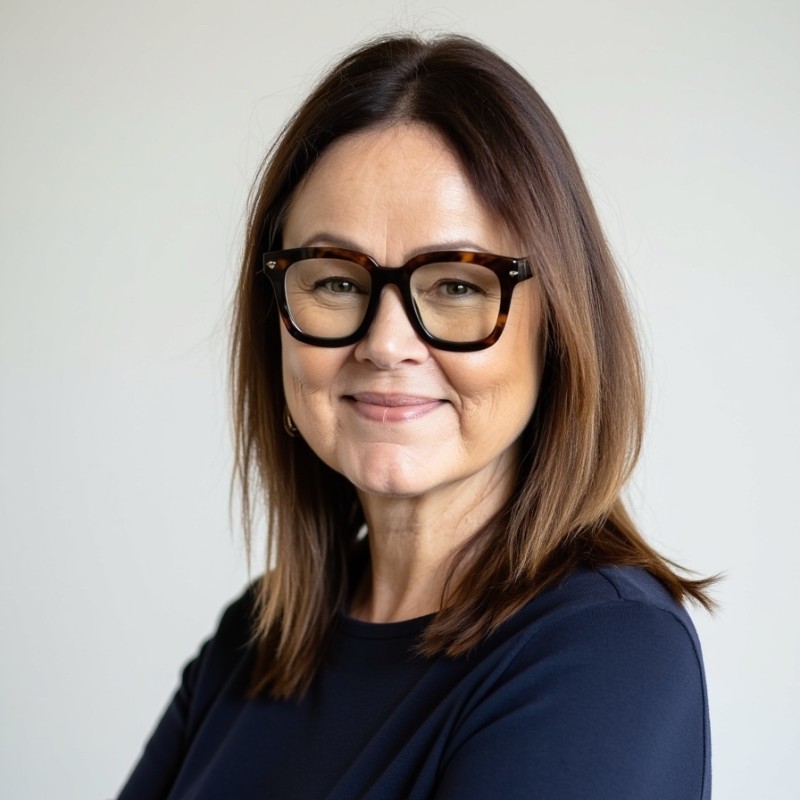
Monika Marinello und Alberto Muzzo interviewed Sarah M. Howell, one of the speakers at the 9th Conference for English teachers “Sparking a Passion for Learning”, which will take place on 21st November 2025 at the EURAC in Bolzano.
Sarah M. Howell, founder of Oracy Lab, believes that developing oracy—the art of speaking and listening well—can transform language learning into a journey of confidence, curiosity, and collaboration. In this interview, she shares how purposeful talk can bring classrooms to life and why voice remains our most human tool for learning.
Monika MARINELLO / Alberto MUZZO: In your experience founding Oracy Lab, what specific elements of oracy have you found to have the greatest positive impact on English language learners?
Sarah M. HOWELL: The most powerful impact comes from teaching students to be aware of how they speak, not just what they say. At Oracy Lab, we’ve seen that when learners reflect on the four strands of oracy – physical (voice and body), linguistic (vocabulary and grammar), cognitive (structure and reasoning), and social-emotional (interaction and empathy) – they start to take ownership of their communication.
For English language learners, this awareness transforms speaking from a moment of anxiety into a process of thinking aloud, building meaning together, and expressing identity. The result isn’t just better English, it’s greater confidence, curiosity, and connection.
Given current challenges (heterogeneous classes, limited classroom time, learner disengagement…) what practical strategies can EFL teachers use to spark and sustain a passion for learning through oracy?
Start small, but make talk purposeful. Even a few minutes of structured oral interaction like a Think-Pair-Share, a Talking Point, or a short Exploratory Talk routine, can turn passive learners into active participants.
What matters most is framing talk as thinking. When students see that discussion helps them clarify ideas, make connections, and solve problems, motivation rises naturally.
Teachers can also draw on visible thinking routines or “talk moves” to guide participation, ensuring every voice is heard. Over time, this creates a classroom culture where speaking and listening become shared responsibilities rather than performance moments.
How can teachers become advocates for oracy to ensure that speaking and oral interaction are valued as much as reading and writing in EFL education?
Advocacy begins with evidence from our own classrooms. When teachers show how oracy enhances comprehension, vocabulary retention, and writing fluency, it becomes harder to see it as “extra.”
Sharing student reflections, recordings, or even transcripts of discussions can make progress visible to colleagues and parents.
At a wider level, teachers can align oracy outcomes with curriculum goals, for example, integrating oral reflection into reading tasks or assessment rubrics. When we present oracy not as a separate skill, but as the foundation for all learning, it earns its rightful place beside literacy.
Assessment often focuses on written outcomes rather than spoken ones. How can EFL teachers effectively assess oracy — not just accuracy, but growth in confidence, collaboration, and critical thinking?
Assessment needs to shift from product to process. A simple rubric based on the Oracy Framework can help teachers track growth in areas such as reasoning, turn-taking, or clarity of expression.
Audio portfolios or “before-and-after” clips can also make progress tangible for students.
Importantly, students should be involved in self- and peer-assessment, reflecting on what helped them speak more confidently or listen more actively. This fosters metacognition and shows that oracy is not about perfection, but about progress in communication and collaboration.
With the rapid rise of AI, video platforms, and voice-based technologies, how can digital tools enhance oracy learning rather than replace authentic human interaction?
Technology can be a powerful ally when used to amplify rather than replace human voices. Video platforms, podcasts, and AI-powered tools can support rehearsal, feedback, and reflection. For example, learners can record short monologues, get pronunciation feedback, or analyse turn-taking in real conversations.
But digital tools should always serve the ultimate goal: real communication between people.
What we must protect, and promote, is the irreplaceable power of face-to-face dialogue: the eye contact, hesitation, laughter, and empathy that remind us why oracy matters. Technology can support these skills, but it can never simulate the spark of genuine human connection.